Content Cabinet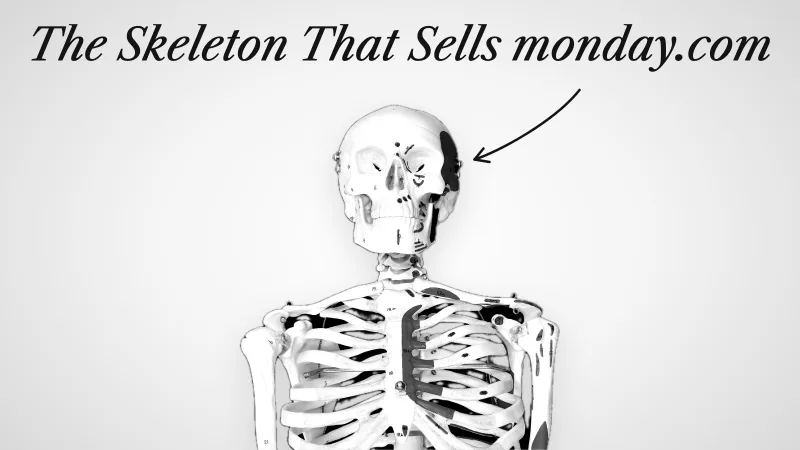

The short answer
Great explainer videos show the product working instead of describing it, stick to one use case, and run about a minute. The median of the 31 below is 61 seconds. Open on the buyer or the outcome, prove it with a real demo, and end on one next step.
What 31 top explainers have in common
- About a minute long. The median is 61 seconds, and 29 of 31 finish inside 90.
- Text over voice. Almost half (15) run on on-screen text with no narrator, and 10 of the 11 most-liked videos use that style.
- Big view counts are mostly ad spend. 16 of 31 get under one like per 1,000 views, the signature of paid YouTube ads, and they hold 99.8% of all the views.
- Mascots stick. Four give the product a human name: Artisan's Ava, Alta's Katie, Salesforce's Einstein and Contra's Indy.
Every video below plays right on this page. View counts are YouTube's own, checked October 14, 2026.
The building blocks of an explainer
All 31 are built from the same few beats, arranged in different orders. Each video below shows its order, the psychology that makes it land, and a beat-by-beat breakdown.
| Beat | What it does |
|---|---|
| Hook | Earns the next five seconds with a question, a bold line or a surprise |
| Problem | Names a pain the viewer already feels |
| Dream outcome | Shows life after the product, before the product appears |
| Solution | Names the product and what it is, in one line |
| Demo | Shows the product doing the job, step by step |
| Use cases | Shows the same product solving different people's problems |
| Social proof | Borrows trust: customer counts, logos, reviews, real reactions |
| End result | Shows the finished thing, the proof that it worked |
| CTA | Asks for one next step: try it, book a demo, visit the site |
Demo-led: the product explains itself
Show one real task from start to finish, and the result lands before the pitch.
Lovable: Shopify integration (2025)

- Intro
- Solution
- Demo
- End result
- Outro
Opens with: "Hi, I'm Rachel from Lovable."
The psychology: Faces first. People look at a face before anything else on screen, so Rachel earns attention before the product appears. Three numbered steps then make the build feel easy.
Steal this: One job a customer can finish inside the video.
Beat by beat
- Intro: Rachel, on camera: anyone can now sell online "just by chatting with AI."
- Solution: "Introducing the Lovable Shopify integration."
- Demo, step 1: "I want to create an online store for clothing." A full store appears, checkout included.
- Demo, step 2: She adds products and images, and Lovable writes the descriptions.
- Demo, step 3: She claims the store on Shopify and publishes.
- End result: "My fully functioning store is now live."
- Outro: "It took me a few prompts to build our store and now you can do the same."
Google: Introducing AI Mode (2025)

- Intro
- Use case
- How it works
- More use cases
- Dream outcome
- CTA
Opens with: "Introducing AI Mode," as on-screen text. There's no narrator.
The psychology: Rhythm. The same question-then-answer beat repeats, so the brain learns the pattern and relaxes into it. Easy-to-follow patterns keep people watching (processing fluency).
Steal this: Prompt, then result, on repeat.
Beat by beat
- Intro: "Introducing AI Mode."
- Use case: A question comparing sleep-tracking features gets an answer with links and images.
- How it works: "A new experimental search experience" that brings "the best of web" together "with the best of Gemini."
- More use cases: "Explain how déjà vu works," then the soonest train to a city.
- Dream outcome: Research, plan, learn and brainstorm, "in whatever way is natural to you."
- CTA: "And it's right here, in Google Search."
monday.com: the skeleton on hold (2025)

- Problem
- Solution
- Dream outcome
- Use cases
- Demo
- Features
- Social proof
- Outro
Opens with: "Your workflow is important to us. Please wait indefinitely."
The psychology: Humor and the peak-end rule. A joke lowers the viewer's guard, and the skeleton returns in the last shot. People judge an experience by its best moment and its ending.
Steal this: Exaggerate the pain until it's funny, then demo with a straight face.
Beat by beat
- Problem: A skeleton still on hold: "Your workflow is important to us. Please wait indefinitely."
- Solution: monday.com puts you in charge, "not IT, not admins."
- Dream outcome: Tailor work "exactly how you love to do it."
- Use cases: Tickets, marketing, projects and sales.
- Demo: Custom fields, views and automations, "without needing help from IT."
- Features: Portfolio tracking and a real-time dashboard for leadership.
- Social proof: "Over 225,000 customers."
- Outro: The skeleton again: "If you're still alive, press one."
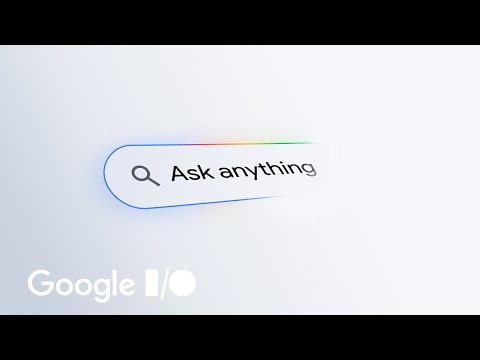
Google: Ask Search Anything (2025)
- Promise
- Use cases
- Outro
Opens with: "Now you can ask Search anything."
The psychology: Repetition with variation. Every section opens the same way ("Ask it to..."), so each new use is understood instantly and the list feels endless without feeling long.
Steal this: If everyone knows your product, spend every second on new ways to use it.
Beat by beat
- Promise: "Now you can ask Search anything."
- Use cases: Simple questions, then long ones with "10 questions in 1."
- Use cases: A live camera asked how to make something stronger, then research for a first home.
- Use cases: Trying on a dress, tracking its price, and asking it to buy. Then a date-night plan and two tickets found.
- Outro: "Type it. Say it. Snap it. Film it. Ask anything."
OpenAI: Apps in ChatGPT (2025)

- Teaser
- Use cases
- Outro
Opens with: The app names, then "Now you can chat with apps."
The psychology: Payoff first. Seeing the result in the opening seconds removes doubt, so every example after it confirms what the viewer already believes.
Steal this: Show the end result first. If the visuals are plain, invest in sound.
Beat by beat
- Teaser: App names (Booking.com, Figma, Coursera), then "Now you can chat with apps."
- Use case: Spotify builds a playlist for a party tonight.
- Use case: Zillow maps homes for sale in Kansas City, then narrows them to ones near a park with a finished basement.
- Use case: Canva turns an outline into a deck.
- Use case: Expedia finds Chicago hotels with a king bed for under $250 a night.
- Outro: All the app logos: "Apps in ChatGPT."
Dream outcome first: sell the result
Open on what the customer gets, then prove it with the product. This works best for broad audiences.
Base44: Bring your ideas to life (2025)

- Dream outcome
- Solution
- How it works
- Use cases
- Outro
Opens with: "Imagine being able to build anything... just by thinking about it."
The psychology: Mental simulation. "Imagine..." asks viewers to picture themselves succeeding, and people who imagine using a product are more likely to want it.
Steal this: Promise the outcome, then prove it within ten seconds.
Beat by beat
- Dream outcome: "Imagine being able to build anything, for any reason, in any style, at any scale, just by thinking about it."
- Solution: "Meet Base44. A complete AI creation platform made for anyone with an idea."
- How it works: "Describe what you want, and watch it take shape."
- Use cases: "From tools built for one to platforms ready for many."
- Outro: "Can you imagine it? Let's make your dream a reality. Right now."
Lovable: An AI Full-Stack Engineer (2024)

- Hook
- Solution
- End result
- Social proof
- Demo
- Features
- Social proof
- CTA
Opens with: "You're a builder."
The psychology: Self-reference. "You're a builder" makes the message about the viewer, and people pay more attention to, and better remember, what's about them.
Steal this: Name your buyer in their own words.
Beat by beat
- Hook: "You're a builder. You can turn ideas into products 20x faster than writing code."
- Solution: "Lovable, the AI software engineer."
- End result: Ideas typed in and built with one click.
- Social proof: "Don't just take our word," followed by testimonials and reviews.
- Demo: A project tracker built from prompts: OpenAI summarizes the week's to-dos, analytics get added, and it deploys.
- Features: UI design, backend, GitHub sync, debugging, one-click deploy.
- Social proof: Press quotes and "5.0/5.0 reviews."
- CTA: "Join 50,000 builders. Try it for free."
Contra: Portfolio Magic (2023)

- Intro
- Easy step
- Result
- Easy step
- Result
- Dream outcome
- CTA
Opens with: "Build the portfolio of your dreams."
The psychology: The aesthetic-usability effect. People assume good-looking products are easier to use, so the polish of the film sells the ease of the product.
Steal this: Show "easy step, instant result" twice.
Beat by beat
- Intro: "Build the portfolio of your dreams."
- Easy step: Answer what you offer and what makes you stand out.
- Result: A polished services page appears.
- Easy step: Click "write a case study" and name the project's goal.
- Result: The case study writes itself, and the portfolio launches.
- Dream outcome: "A portfolio that works for you."
- CTA: "Independence starts here."
ElevenLabs: Eleven v3 (2025)

- Dream outcome
- Solution
- Demo
- New features
- Demo
- New features
- Demo
- CTA
Opens with: "What if you could control every whisper, every laugh, every word?"
The psychology: Proof you can hear. Each claim is followed by a sample, so belief comes from the viewer's own ears instead of the brand's word.
Steal this: If your product makes something, build the video out of it.
Beat by beat
- Dream outcome: "What if you could control every whisper, every laugh, every word, exactly the way you imagined?"
- Solution: "Introducing v3. Voice generation with full control over emotion."
- Demo: One line read surprised, then miserable.
- New features: Control over delivery ("Arrr, shiver me timbers!") and over 70 languages.
- Demo: A knock-knock joke between two voices, generated from one prompt.
- New features: A new architecture: characters can laugh, cry or even sneeze.
- Demo: Background sound inside the prompt: "Gee, it's raining cats and dogs outside," with rain.
- CTA: "Try it today with ElevenLabs."
Show, don't tell: no narrator
Short lines of text over the product, with music setting the pace. They play on mute, and it's the style viewers liked most.
Google: Welcome to the Gemini era (2024)

- Intro
- Capabilities
- Reactions
- Capabilities
- Reactions
- Capabilities
- Outro
Opens with: Google's logo, then a burst of what Gemini can do.
The psychology: Emotional contagion. Watching real people light up makes viewers feel the same, which works as proof without a single testimonial.
Steal this: Real reactions beat a testimonial slide.
Beat by beat
- Intro: Google's logo unfolds.
- Capabilities: Search, image generation and image recognition, at speed.
- Reactions: People "getting it."
- Capabilities: Circle an object in a picture to search for it.
- Reactions: More faces.
- Capabilities: Email summaries, camera recognition, a voice assistant.
- Outro: "Together we're creating a new era. Welcome to the Gemini era."
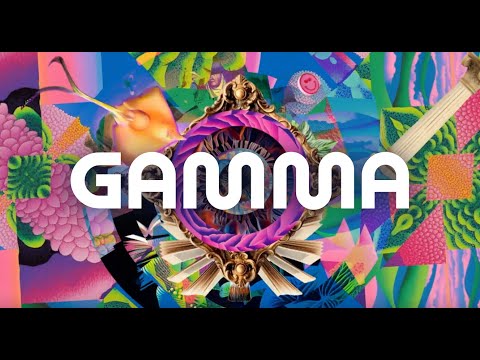
Gamma: What's Your Big Idea? (2025)
- Hook
- Dream outcome
- Use cases
- Outro
Opens with: "What's your big idea?"
The psychology: Find yourself in it. Three very different use cases let a founder, a teacher and a coach each see their own job on screen.
Steal this: Pick three use cases from three different buyers.
Beat by beat
- Hook: "What's your big idea?"
- Dream outcome: Docs, sites, socials and presentations "in a click."
- Use case: A pitch deck for a sustainable fashion brand, then a new slide added by chat.
- Use case: An astronomy course for children, animated with one click.
- Use case: A mindfulness coach's website, turned into a carousel.
- Outro: "Your big idea. One click from creation."
Google: Introducing Canvas in Gemini (2025)

- Intro
- Use cases
- CTA
Opens with: "Your AI assistant from Google, reimagined for better collaboration."
The psychology: Low cognitive load. Lines of three to six words can be read at a glance, so attention stays on the demo instead of splitting between text and picture.
Steal this: Write on-screen text as captions to the action.
Beat by beat
- Intro: "Your AI assistant from Google, reimagined for better collaboration. Introducing Canvas in Gemini."
- Use case: "Help me write a five-minute speech based on my notes," then "suggest edits."
- Use case: "I want to build an app, I'm learning how to code," turned into code with a live preview.
- Use cases: "Docs. Timelines. Data. Games. Apps. All in one space."
- CTA: "Try Canvas in Gemini today."
Microsoft: Microsoft 365 Copilot (2024)

- Intro
- Stats
- Use cases
- Features
- Outro
Opens with: "Hey Copilot, what have you been up to over the last year?"
The psychology: Authority. "Used by nearly 70% of the Fortune 500" borrows the credibility of big companies in the first seconds.
Steal this: Pack product, upgrade and proof into your first line.
Beat by beat
- Intro: "Hey Copilot, what have you been up to over the last year?"
- Stats: 2x faster responses, 3x higher satisfaction, used by nearly 70% of the Fortune 500.
- Use cases: Prioritize my inbox, make this presentation pop, research for the team.
- Use cases: Delegate a task, then turn a business process into an agent.
- Features: Glass-style 3D views of more features.
- Outro: "That was fun! What should we work on next?"
Lottielab: Introducing Burp (2025)

- Use cases
- End result
- How it works
- Outro
Opens with: "What do you want to make today?"
The psychology: The curiosity gap. Finished results with no explanation make viewers want to know how, and the launch post is there to answer.
Steal this: Show the outputs first and the process second.
Beat by beat
- Use cases: Prompts for a TikTok ad for a weekend menu, a social ad for a health tech platform, an animated wellness poster and store banners.
- End result: A quick look at each finished piece.
- How it works: Prompt, generate, design, animate.
- Outro: "Cooking up our most magical release yet."
Google Workspace: Workspace Studio (2025)

- Intro
- Solution
- Use cases
- Dream outcome
- Outro
Opens with: "Effortless automation."
The psychology: Removing doubt. What it is, where it lives and how hard it is are the questions that stop people from trying something new, so it answers them first.
Steal this: Answer what, where and how easy before you demo.
Beat by beat
- Intro: "Effortless automation."
- Solution: Workspace Studio drops into the menu: "Design AI agents in minutes."
- Use case: An agent checks each email's tone, marks negative ones to respond to and drafts a reply.
- Use cases: Agents that "analyze, extract, prioritize and create." "No technical skills required."
- Dream outcome: "Move faster and work smarter, directly in your Workspace apps."
- Outro: "Gemini-powered automation for everyday work."
Launches and updates: one video, two audiences
Users want the news and newcomers need the basics. The best update videos serve both.
Lovable: Lovable 2.0 (2025)

- Hook
- Dream outcome
- Social proof
- Demo
- New features
- CTA
Opens with: "Today less than 1% of the world knows how to code."
The psychology: Surprise. A startling number ("less than 1%") stops the scroll, and it makes everyone watching feel early.
Steal this: Make the first half of every update video a standalone explainer.
Beat by beat
- Hook: "Today less than 1% of the world knows how to code. But that's about to change."
- Dream outcome: Build apps, websites, tools and ideas "faster than ever before."
- Social proof: "Join other builders creating 53,980 new apps every single day."
- Demo: "Create a social shopping marketplace," then add a sidebar with a profile.
- New features: Collaboration, editing in preview, your own domains, and a dev mode for editing code.
- CTA: "Now it's your turn. What are you building?"
ElevenLabs: the product tour (2024)

- Intro
- How it works
- Social proof
- More use cases
- Outro
Opens with: The logo, then "Text to speech."
The psychology: Scale by showing. Seven real outputs in a row signal a big, mature company without anyone saying so.
Steal this: Go long only if every section shows output.
Beat by beat
- Intro: The logo, then text to speech: type, pick a voice, listen.
- How it works: A dubbing studio turns an English podcast into other languages in the speakers' own voices.
- Social proof: Likes, reviews and testimonials.
- More use cases: Voice cloning with payouts for voice artists, voice design, sound effects on a sports-car clip.
- More use cases: Conversational AI agents that take phone calls.
- Outro: ElevenReader audiobooks: "Explore. Listen. Create. Publish."
n8n: Meet n8n's New Pricing (2025)
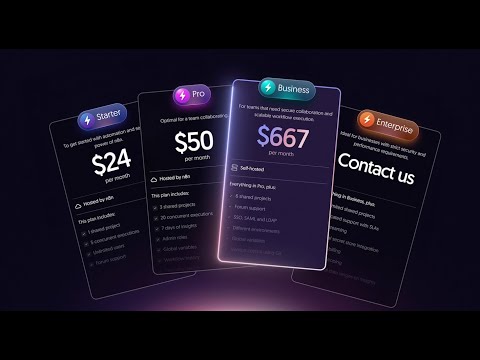
- Problem
- Solution
- How it works
- Social proof
- Pricing
- CTA
Opens with: "Most tools are great until you need something truly flexible."
The psychology: Transparency. Saying the pricing model plainly removes the fear of hidden costs, a common reason buyers hesitate.
Steal this: If your pricing sells, say it in one sentence.
Beat by beat
- Problem: "Most tools are great until you need something truly flexible."
- Solution: "We give builders real freedom to create AI agents and automations."
- How it works: "Connect your tools. Build fast with drag and drop. Go deep with code."
- Social proof: "Over 1 million builders."
- Pricing: Unlimited workflows, steps and users; you pay for how often workflows run. A new Business plan adds self-hosting, SSO and Git.
- CTA: "With n8n, build anything, automate everything."
Google DeepMind: Vibe coding in AI Studio (2025)

- Dream outcome
- Teaser
- Demo
- More use cases
- CTA
Opens with: "Bring anything to life."
The psychology: Promise, then proof. A big claim makes people skeptical; a real example within seconds turns doubt into belief.
Steal this: Back a big promise with proof inside five seconds.
Beat by beat
- Dream outcome: "Bring anything to life."
- Teaser: "Build a music video game," and the game appears.
- Demo: "I'm feeling lucky" starts a car game: the thinking, then the prototype.
- Demo: "Refine. And refine some more. Share with a friend. And remix. Then share with the world."
- More use cases: A rapid run of other apps.
- CTA: "Bring anything to life," with the logo.
ElevenLabs: Introducing Studio 3.0 (2025)

- Intro
- Solution
- Old features
- New features
- CTA
Opens with: "ElevenLabs proudly introduces Studio 3.0."
The psychology: The aha moment. The speech correction demo makes people ask "wait, how?", and surprise is what gets remembered and shared.
Steal this: If people already know you, open on the launch and spend the time on one "wait, how?" demo.
Beat by beat
- Intro: "ElevenLabs proudly introduces Studio 3.0."
- Solution: All of its audio models in one editor, now with video.
- Old features: Voiceovers, background music, sound effects and a timeline for precise edits.
- New features: Speech correction: "launching this October" becomes "this September" without re-recording.
- New features: Noise removal, automatic captions and shareable projects with timestamped feedback.
- CTA: "Try Studio 3.0 today and give your videos the audio they deserve."
Mascots: a product with a name and a face
A named AI employee is easier to remember than one more faceless tool.
Salesforce: Say Hello to Einstein Copilot (2024)

- Problem
- Solution
- Use cases
- Outro
Opens with: "Work is about to change. For good."
The psychology: Anthropomorphism. Naming the AI after Einstein gives it a personality and a promise of genius, which is easier to remember than "AI assistant."
Steal this: Show the prompt and the reply, never a list of what the AI can do.
Beat by beat
- Problem: Chat windows flooded with requests.
- Turn: "Work is about to change. For good." Einstein switches on.
- Solution: "Einstein Copilot, conversational AI for your CRM."
- Use cases: A 10% discount for the eco line, a close plan for a deal, a case escalated for approval.
- Outro: "Now everyone's an Einstein."
Contra: Introducing Indy AI (2025)
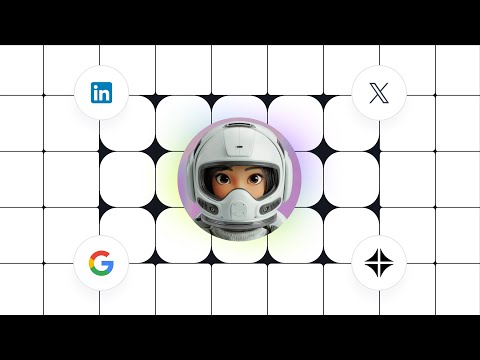
- Hook
- Solution
- How it works
- Dream outcome
- Outro
Opens with: "Job boards are dead. Your network is alive."
The psychology: Pattern interrupt. "Job boards are dead" contradicts what freelancers believe, which stops the scroll, and the "touch grass" shot gives the film a warm, funny ending.
Steal this: Pair a bold first line with one shot of the life you give back.
Beat by beat
- Hook: "Job boards are dead. Your network is alive."
- Problem: A wall of "looking for a designer" posts.
- Solution: "Hi, I'm Indy. I find hidden opportunities in your network."
- How it works: Connect Indy, and it scans thousands of posts and surfaces the jobs.
- Dream outcome: "Pull signals from the noise. So you can touch grass."
- Outro: "Let the work find you."
Artisan: How Ava, the AI sales rep, works (2024)

- Hook
- Solution
- How it works
- Features
- CTA
Opens with: "Are you a B2B company ready to supercharge your growth?"
The psychology: Self-selection. A yes-or-no question about the viewer makes the right buyers answer "yes" in their heads, and they keep watching to see why.
Steal this: "Are you a [buyer] ready to [outcome]?" Test it this week.
Beat by beat
- Hook: "Are you a B2B company ready to supercharge your growth?"
- Solution: "Introducing Ava," "the world's first AI employee," and she's a sales rep.
- How it works: A 10-minute onboarding conversation, a scan of your website, your customer persona.
- How it works: Thousands of leads, personalized emails, answers to replies, a calendar full of meetings.
- Features: Email warm-up, self-optimization, analytics, CRM integrations, all managed from Slack.
- CTA: "Ava fills the role of a team of appointment setters. 10x your pipeline today."
Alta: Meet Katie, the AI SDR (2025)

- Problem
- Solution
- How it works
- Dream outcome
- CTA
Opens with: "Struggling to build your sales pipeline?"
The psychology: Pain first. Cold viewers don't care about a product until they recognize their own problem, so the problem comes before Katie does.
Steal this: With a cold ad audience, lead with the problem.
Beat by beat
- Problem: "Struggling to build your sales pipeline? Finding the best prospect feels impossible."
- Solution: "Meet Katie, your AI SDR agent."
- How it works: 50+ data sources and buying signals, with the highest-intent prospects first.
- How it works: Personalized messages and calls, in 20+ languages, 24/7.
- Dream outcome: "So your team can focus on closing deals."
- CTA: "Start with Katie today."
YouTube ads: paid reach, still worth studying
Each one had to hold strangers who could skip after five seconds.
Canva: Win at work (2024)

- Intro
- Use case
- Use case
- Feature
- Validation
- CTA
Opens with: "And we're back with the action here."
The psychology: A familiar frame. Everyone knows how a sports broadcast works, so the brain spends no effort on the format and all of it on the features.
Steal this: Borrow a format people already enjoy.
Beat by beat
- Intro: The logo, then two commentators: "And we're back with the action here."
- Use case: A team works together on a whiteboard ("they're working so well together").
- Use case: "Oh, they're going for the switch!" The whiteboard becomes a doc in one click.
- Feature: AI summaries and charts ("they might need to tighten it up").
- Validation: "It's paid off! I can't believe it."
- CTA: "Be at the top of your game at work, with Canva."
monday.com: Make the switch from spreadsheets (2022)

- Problem
- Solution
- Features
- Brand message
- CTA
Opens with: "Everyone loves spreadsheets. Actually, they don't."
The psychology: Expectation violation. The first line sets up a familiar idea and breaks it in the same breath, and broken expectations grab attention.
Steal this: Break the expected first line, then keep the structure classic.
Beat by beat
- Problem: "Everyone loves spreadsheets. Actually, they don't."
- Solution: A spreadsheet imported into monday.com: "Holy sheeeet!"
- Reframe: An easy way to build any solution you need for work, rather than a spreadsheet replacement.
- Features: Ready-made solutions, collaboration in context, automations and integrations.
- Brand message: "A new way to work. Without limits."
- CTA: "Make the switch today."
monday.com: Gantt charts (2022)

- Hook
- Solution
- End result
- How it works
- Dream outcome
- CTA
Opens with: "monday.com makes Gantts great again."
The psychology: Mere exposure, without wear-out. One use case per ad keeps each ad simple, and rotating many ads builds familiarity before people tire of any one.
Steal this: Make one ad per use case and rotate them.
Beat by beat
- Hook: "monday.com makes Gantts great again... they never were. They're complicated."
- Solution: Add project stages, owners and timelines.
- End result: "BOOM! You got a Gantt."
- How it works: Update a delayed stage, while others view the same data their own way.
- Dream outcome: "Achieve more, in less time, with less hassle."
- CTA: "Make one yourself in minutes. It's free to try."
Framer: Framer for Enterprise (2024)

- Problem
- Solution
- Features
- Social proof
- Features
- End result
- CTA
Opens with: "Picture this: you've got a big new website idea."
The psychology: Show, then reassure. The timelapse shows speed instead of claiming it, then enterprise specs answer the risk questions big buyers ask.
Steal this: For a visual product, the timelapse is the hero shot.
Beat by beat
- Problem: "Picture this: you've got a big new website idea", and building it would take months.
- Solution: "With Framer, designing is building," with nothing to hand off and no waiting.
- Features: Full sites and landing pages in a quick timelapse, a CMS and SEO tools.
- Social proof: "Big teams worldwide love Framer."
- Features: Enterprise security, 24/7 support and 99.99% uptime.
- End result: "Framer is ready for your biggest ideas."
- CTA: "Let's build."
Framer: Ship Faster. Build Smarter. (2025)

- Problem
- Solution
- Demo
- Features
- Dream outcome
- CTA
Opens with: "You know how a few small changes on your website can somehow take days, or even weeks, to ship?"
The psychology: Relatability. "You know how..." describes the pain in the viewer's own words, so they nod along before the product appears.
Steal this: Keep ads to 30 to 45 seconds.
Beat by beat
- Problem: Small website changes take days, or even weeks, to ship.
- Solution: "With Framer, that's over."
- Demo: The site "lives here", inside Framer, in a quick timelapse.
- Features: Designers and marketers publish on their own, with a CMS and plugins.
- Dream outcome: Your whole team unblocked, building momentum.
- CTA: "Ship faster. Build smarter. With Framer."
Wix Studio: The ultimate design experience for agencies (2025)
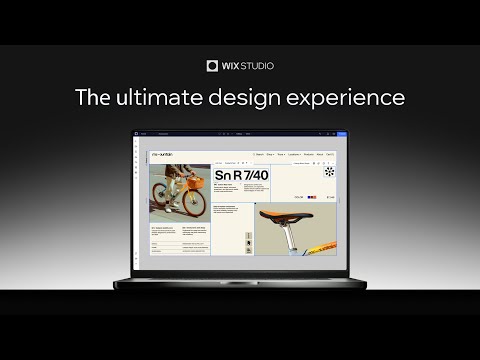
- Intro
- Use cases
- Features
- End result
- Outro
Opens with: "Step into Wix Studio."
The psychology: Craft as proof. People judge a tool by how its marketing looks, so polished animation of the real interface makes the product feel polished too.
Steal this: Animate your real UI instead of screen-recording it.
Beat by beat
- Intro: "Step into Wix Studio."
- Use cases: Kick off projects and design complex layouts "to that very last pixel."
- Features: Dynamic content, responsive design with AI, custom interactions.
- End result: A rapid montage of finished sites: "web creation at scale."
- Outro: "This is your studio."
Base44: Turn any idea into an app (2025)

- Dream outcome
- Solution
- Teaser
- Demo
- CTA
Opens with: "We have got to the point where literally anybody can build a fully working app without knowing how to code."
The psychology: Seeing is believing. A real person building a real app beats any claim, and hundreds of millions of ad plays made the brand familiar.
Steal this: Prove it twice: a fast montage, then one full build.
Beat by beat
- Dream outcome: "Literally anybody can build a fully working app without knowing how to code."
- Solution: "This is Base44," the AI app builder.
- Teaser: A montage of apps people built: nutrition apps, inventory trackers, onboarding tools.
- Demo: An app that suggests app ideas, built from a detailed prompt, then given a swipe-left, swipe-right screen.
- Demo: One more feature: every favorite becomes a prompt to start building.
- CTA: "Go to Base44 and create apps with your name on it."
The psychology behind them
A handful of well-known effects do most of the work across these 31 videos.
| Effect | What it does to the viewer | Seen in |
|---|---|---|
| Faces first | People look at faces before anything else on screen | Lovable (Shopify), Base44's ad |
| Curiosity gap | A question or teaser opens a gap the brain wants to close | Gamma, ElevenLabs, Lottielab's Burp |
| Self-reference | People pay more attention to messages about themselves | Lovable (2024), Artisan |
| Social proof and authority | Other people's choices tell us what's safe to choose | Microsoft, monday.com, n8n, Lovable 2.0 |
| Expectation violation | A broken expectation forces attention | monday.com's spreadsheet ad, Contra's Indy AI |
| Peak-end rule | People remember the best moment and the ending | monday.com's skeleton, Contra's Indy AI |
| Low cognitive load | One idea at a time is easier to follow and remember | Gemini Canvas, monday.com's Gantt ad |
| Anthropomorphism | A named character is easier to relate to and remember | Artisan's Ava, Alta's Katie, Salesforce's Einstein |
| Mere exposure | Repeated, varied exposure builds familiarity and liking | monday.com's ad rotation, Base44's ad |
The six script structures behind them
| Structure | Order | Used by |
|---|---|---|
| The classic | Problem → solution → how it works → features → proof → CTA | monday.com, n8n, Alta, Framer |
| Dream outcome first | Outcome → solution → how it works → use cases | Base44, ElevenLabs, Google AI Studio |
| Persona hook | "Are you a [buyer] ready to [outcome]?" → solution → how it works → CTA | Artisan, Lovable |
| Show, don't tell | Hook → prompt and result, repeated, all in on-screen text | Gamma, Gemini Canvas, OpenAI, Workspace Studio |
| Stat opener | Stat → outcome → proof → demo → what's new → CTA | Lovable 2.0 |
| Exaggerated problem | Absurd pain → solution → demo → callback | monday.com |
How long should an explainer video be?
About a minute. The median here is 61 seconds. Ads and mascot videos run shortest (medians of 55 and about 40 seconds), and demo-led videos run longest (median 81). A good rule: 30 to 45 seconds for ads, 45 to 75 for a homepage or launch video, and up to two minutes only for a tour of a product people already use.
Voiceover or on-screen text?
Almost half of these run on on-screen text and music. They play on mute in a feed or on your homepage, and they're the ones viewers liked most. Keep a narrator for YouTube ads, where people watch with the sound on, or when the idea needs a full sentence to land.
Should a startup copy Google's explainers?
Copy the demos, not the structure. Google's Gemini film has no problem, no proof and no CTA, and OpenAI never explains what ChatGPT is. They can skip context because everyone already has it. A startup can't: say who it's for and what it does in the first five seconds, add proof a stranger can check, and end on one next step.
One of ours: Schneider Electric


A 2D systems explainer and a 3D product film for hardware that's hard to film, both made without a shoot day.
Questions people ask
What makes a good explainer video?
It shows the product doing one real job, opens with a line about the buyer or the outcome, and ends on one next step. Most of the 31 here do it in 30 to 90 seconds.
How long should an explainer video be?
About a minute. The median of the 31 here is 61 seconds, and 29 finish inside 90. Keep ads to 30 to 45 seconds, and go past 90 only for a tour of a product people already use.
What's the difference between an explainer video and a product demo?
An explainer says what a product is and why it matters, for people who've never seen it. A demo shows how it works, for people already interested. The best new explainers do both, like Lovable's Shopify video.
Do explainer videos need a voiceover?
No. Almost half of the 31 here run on on-screen text and music, including the most-liked one, OpenAI's Apps in ChatGPT. Use a narrator for YouTube ads, where people watch with the sound on.
What's the best script structure for an explainer video?
For cold audiences, use problem, solution, how it works, features, proof and CTA, like monday.com and Alta. For a big launch to a broad audience, open on the dream outcome instead, like Base44 and ElevenLabs.
What psychology makes an explainer video work?
A handful of well-known effects. Faces and real reactions grab attention, a question or teaser opens a curiosity gap, naming the viewer's identity or pain makes it personal, and a strong ending sticks because people remember the peak and the end of an experience.
Can you trust YouTube view counts on explainer videos?
Not on their own, because YouTube counts paid ad views. Base44's ad has 587.3M views and 437 likes. Fewer than one like per 1,000 views usually means most of the views were paid, and 16 of the 31 here fit that pattern.
Is a whiteboard explainer still a good idea?
For simple ideas or internal training, yes, and it's the cheapest style. None of the 31 top SaaS explainers here uses it, because real UI, motion graphics or live action look more current for a launch.