Content Cabinet
The short answer
The best product demo videos state the user's problem in one sentence, show the product solving it on screen within the first 15 seconds, and run from 40 seconds to several minutes depending on how far along the buyer is. Short demos work for ads and landing pages; longer walkthroughs work for people already evaluating.
The most famous early demo is Drew Houston's 2007 screencast of Dropbox: the founder, a desktop and a narrated tour. A later Dropbox demo video, posted to Digg in March 2008, took the beta waiting list from 5,000 to 75,000 people in one day, according to Houston's own Startup Lessons Learned slides.
Where it started: two founder demos
Dropbox, the original demo (2007)
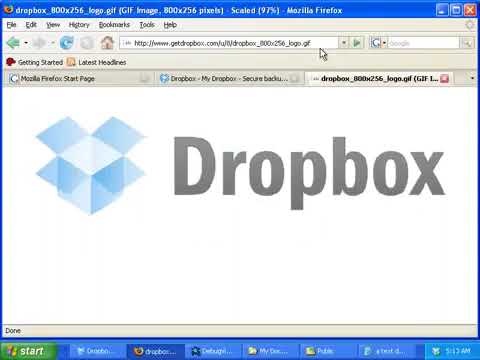
"Okay, my name's Drew, and we'll be taking a quick tour of Dropbox." There is no music and no animation. Houston says what makes it different, "it just works", and then tells a developer audience exactly what it is: "kind of like taking Subversion and rsync and making them easy to use". The lesson: a demo needs clarity more than production value when the product is genuinely new.
PostHog (2026)

It opens on what PostHog calls "the only question that matters: What should I build next?", then walks through the product. At almost nine minutes it is long, but a 1.34% like rate is the highest on this page, so the people who watch it chose to.
Short demos that open on the use case
Loom: What is Loom? (2023)

"Why don't you replace some of those meetings with a Loom?" The first line is the use case, and the rest of the video shows it.
Loom AI (2024)

A 38-second feature demo. Its 441 likes on 328,623 views suggest most people saw it as an ad, which is a fine job for a demo this short.
Introducing Superhuman (2021)

It opens on a question about the buyer, not the product: "What would you do with an extra 2 hours every day?" Then one hard number carries the claim, "everything from search to send is faster than 100 milliseconds", and the rest is keyboard shortcuts and automations flying past. The 320 likes on 650,832 views say it ran as an ad, and for an ad, a question plus one number is the right shape.
Product tours
Intro to Linear (2025)

Before showing anything, it tells you the two things to notice: Linear is "purpose built for product teams" and "opinionated where it needs to be". Then it builds a sample workspace for a rideshare company, so every screen has a context.
Meet Ramp (2024)

Every feature is framed as work you no longer do: "expenses submit themselves". The 367 likes on 1.72 million views say this one ran as an ad.
What is Notion? (2026)

Defines a crowded category by what Notion is not, before showing what it is. We broke this one down in our explainer examples.
Demos built around one scenario
Retool Workflows (2023)

It invents one believable customer and builds for it live: "say that we're a vacation home rentals company and we want to send an hourly notification to our operations team about new booking requests". Then it pulls bookings from a Postgres database with real SQL and runs each step to show it works. Developers trust what they can watch run, so the demo is the code.
Clay: What is Clay? (2024)

It opens on the customer's problem, manual prospect research and "hefty annual contracts to data providers", then gives the whole product a four-step shape: find, enrich, transform and export. A buyer who remembers four steps can explain the product to their boss, which is the job a demo for a team purchase has to do.
Freshworks: What is Freshdesk? (2025)

Opens on the customer's pain, "Customer support is feeling the squeeze", before Freshdesk appears. The 28 likes on 513,160 views show it ran almost entirely as an ad.
What the likes say about the views
| Demo | Views | Likes | Like rate |
|---|---|---|---|
| PostHog | 48,360 | 648 | 1.34% |
| Clay | 61,568 | 576 | 0.94% |
| Loom, What is Loom? | 104,939 | 962 | 0.92% |
| Linear | 186,147 | 1,610 | 0.86% |
| Notion | 119,466 | 905 | 0.76% |
| Retool Workflows | 21,727 | 131 | 0.60% |
| Loom AI | 328,623 | 441 | 0.13% |
| Superhuman | 650,832 | 320 | 0.05% |
| Ramp | 1,721,398 | 367 | 0.02% |
| Freshdesk | 513,160 | 28 | 0.005% |
Demos people seek out earn likes; demos that run as ads collect views. Both have a job, but only the first kind tells you the demo itself is working. Before you copy a demo because of its view count, check this ratio.
A demo structure that works
| Part | What happens | Time |
|---|---|---|
| Problem | One sentence the buyer already says to themselves | 0 to 5 s |
| First win | The product doing the core job on screen | 5 to 15 s |
| Two more jobs | Each a different benefit, shown rather than told | 15 to 60 s |
| Proof | A number, a customer or a result | near the end |
| Next step | Trial, signup or booking | last 5 s |
Questions people ask
What should a product demo video include?
The user's problem in one sentence, the product doing its core job within 15 seconds, two or three more jobs, one piece of proof, and one next step.
How long should a product demo video be?
Under 40 seconds for ads and landing pages; two to five minutes for buyers already evaluating. PostHog's official demo runs almost nine minutes and still earns a 1.34% like rate.
What is the most famous startup demo video?
Drew Houston's early Dropbox demos. His slides record that a Dropbox demo posted to Digg in March 2008 took the beta waiting list from 5,000 to 75,000 people in one day.
Should a demo be animated or a screen recording?
A clean screen recording works when the interface is clear. Animation helps when the product works in the background or the interface is cluttered.
What is the difference between a demo and an explainer?
An explainer explains the idea and often uses a metaphor; a demo shows the actual product doing real work.