Content Cabinet
The short answer
Film every claim about what the robot can do as real footage, labeled on screen with who was in control and the playback speed, and use 3D animation only for what a camera can't see: the inside of the machine, what the sensors see, or a product that isn't built yet. Viewers learned to doubt robot videos after reports that Tesla's Optimus robots were remotely operated at its October 2024 event, and after a 2025 hands-on found 1X's NEO doing chores under remote guidance. So the strongest robot launches now label each clip, for example "Autonomous 1×", and publish uncut footage next to the polished film. Sunday does both on its own homepage.
Content Cabinet, which wrote this guide, makes launch films and 3D films for deep tech companies, including a film on the technology behind Minus Zero's self-driving zPod.
What should a robot demo video prove, at a glance?
| Question | Short answer |
|---|---|
| What do viewers assume now? | That a person may be steering the robot, unless the video says otherwise. |
| What should be on screen? | Who was in control and the playback speed, on every shot, for example "Autonomous 1×". |
| Real footage or 3D? | Real footage for anything the robot does. 3D for what a camera can't see, labeled as animation. |
| Is teleoperation a problem? | Only when it's hidden. Say when a person was in control. |
| Does anyone watch uncut footage? | Fewer people, but it makes the short film believable. Publish both together. |
| How long should the launch film be? | Sixty to ninety seconds, with at least one long, unbroken take. |
Why don't people believe robot videos anymore?
Because they have been shown, more than once, robots that turned out to be operated by people. At Tesla's "We, Robot" event in October 2024, Optimus robots poured drinks and chatted with guests. Afterwards Bloomberg, The Verge and others reported that people working remotely had controlled many of those interactions, and one robot told a guest on camera that it was "assisted by a human", TechCrunch reported.
A year later 1X opened orders for NEO, a home robot priced at $20,000, or $500 a month. Its promo showed NEO tidying a home. In a Wall Street Journal hands-on, the chores were done in what 1X calls Expert Mode, with a person guiding the robot through a VR headset, Tom's Guide wrote. 1X is open about this on its own page: NEO "works autonomously by default", and for chores it doesn't know yet, an expert from 1X can remotely supervise it at scheduled times.
Neither case means remote control is wrong. People guiding robots is one of the ways robots learn. The damage comes from the gap between what a film implies and what was happening while it was shot. Close that gap on screen, and the first comment under your launch has nothing left to ask.
What proof should a robot demo video show?
Show who was in control, the real speed, one unbroken take and a real place, then give people a way to check. These are the receipts we look for in every robot film.
| The receipt | How to show it | Why it matters |
|---|---|---|
| Who was in control | A label on every shot: autonomous, teleoperated or assisted | It answers the first question before the comments ask it |
| The playback speed | "1×" on screen, or the speed-up stated, such as "4×" | Sped-up footage reads as a trick unless you say so |
| One unbroken take | Hold the hardest task in one long shot | Viewers assume help arrived wherever there is a cut |
| What the robot sees | Overlay its camera view and what it decides next | It shows judgment, which a puppet can't fake |
| A real place | A lived-in kitchen, a working warehouse, a street | Spotless labs look like sets |
| A miss and a recovery | Keep one fumble and the retry | A robot that never slips looks staged |
| The uncut source | Publish the long, unedited run and link to it | It lets skeptics check for themselves |
Sunday, a home robot company, shows what this looks like. On its homepage, each clip of its robot Memo carries a label such as "Autonomous 1×" or "Autonomous 5×", next to an uncut video of Memo cleaning up. The same page says Memo learns from people wearing Sunday's capture glove, rather than through remote operation in your home. In March 2026 the company titled its Series B post "No More Demos", arguing that the industry's demos are "designed to impress through the screen."
Does anyone watch the uncut footage?
Far fewer people watch it, and that's fine, because its job is to make the short film believable. On Sunday's YouTube channel, the 2.5-minute "ACT-2: Preview" had about 66,000 views when we checked, while two uncut three-hour videos of Memo folding laundry had about 17,000 and 6,700.
| Video | Length | Views |
|---|---|---|
| Introducing Memo, from Sunday | 1:04 | 79K |
| ACT-2: Preview | 2:26 | 66K |
| ACT-1: A Robot Foundation Model Trained on Zero Robot Data | 4:10 | 63K |
| ACT-2 Preview: 3hrs of Memo Folding Laundry | 2:40:19 | 17K |
| 3-Hour Memo Folding (Lofi Edition) | 2:39:32 | 6.7K |
Make the short film for attention and the long take for trust, and release them together. The film should tell viewers where the long take lives.
When should a robot or hardware launch use 3D animation?
Use 3D for what a camera can't show, and never in place of what you claim the robot can do. 3D is the right tool for the inside of a machine, how parts move together, what a sensor sees, how heat, power or data flows, and products that so far exist only in CAD. It backfires when it stands in for capability, because viewers who already doubt robot footage will assume everything else was rendered too.
| What you need to show | Best format | Label on screen |
|---|---|---|
| The robot doing a task | Real footage | Who was in control, and the speed |
| A mechanism inside the hand, arm or gearbox | A 3D cutaway | "Animation" |
| What the robot sees and decides | Real footage with a sensor overlay | "Robot's view" |
| A product you haven't built yet | 3D | "Concept" or "Rendering" |
| A fleet, a factory, a city | 3D, or a mix with real footage | "Visualization" |
| Hardware that sits in a rack: chips, power, networking | 3D, often for the whole film | Needed only if a shot could pass for footage |
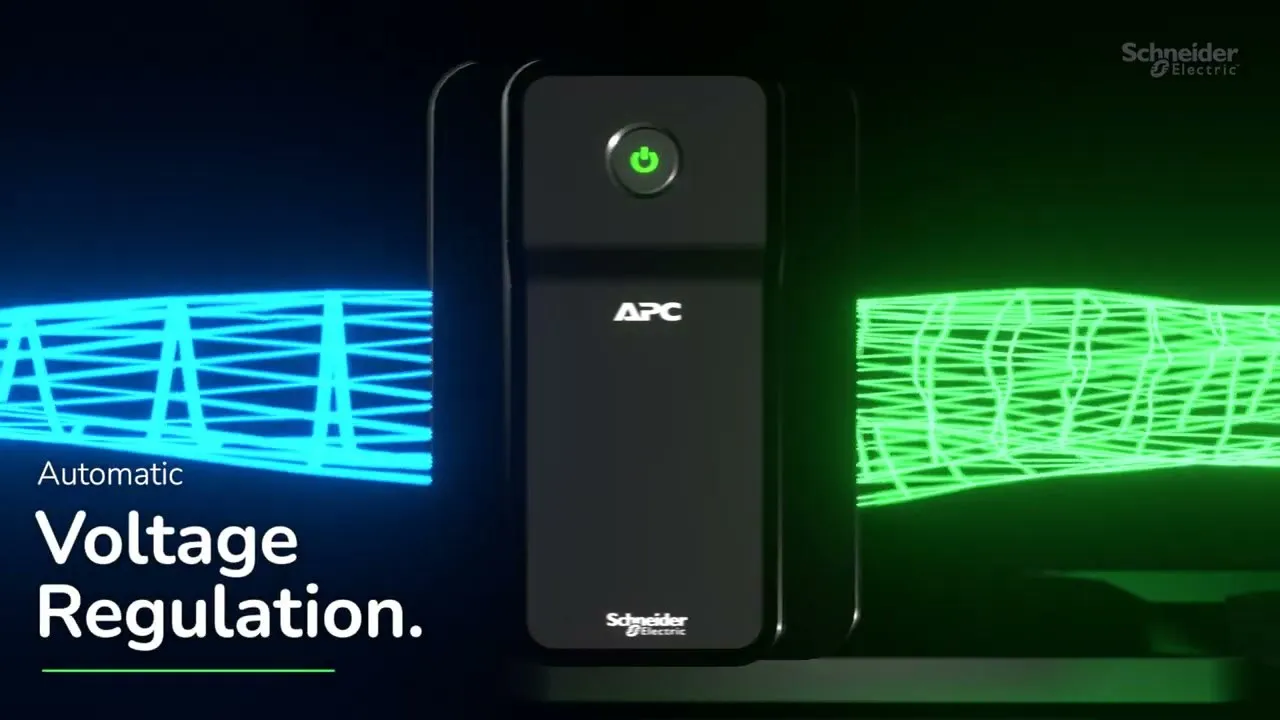
We made four films for Schneider Electric and APC without a single shoot day, because the value of that hardware sits inside a box a camera can only film from the outside. Two of them are below.
How should a robot launch film be structured?
Lead with the robot doing the job, prove it in one unbroken take, explain the inside with 3D, then show the receipt. This is the shape we use for a 60 to 90-second launch film.
| Seconds | Beat | On screen |
|---|---|---|
| 0 to 3 | The claim | The robot mid-task, with the control and speed label already showing |
| 3 to 15 | The job | The work it takes off someone's hands, in a real place |
| 15 to 45 | The proof | One long, unbroken take of the hardest part, at 1× |
| 45 to 60 | How it works | A labeled 3D cutaway, or the robot's own view |
| 60 to 75 | The receipt | Where to watch the uncut run, the filming date and the hardware version |
| 75 to 90 | The ask | Pre-order, pilot, hiring or the waitlist |
What should go in the launch post and the press kit?
- The post's first line. What the robot did, then the label. For example: "Our robot loaded a dishwasher it had never seen, fully autonomous, at 1×."
- The next lines. Say in plain words what, if anything, a person controlled, and why.
- The press kit. The uncut files, the hardware version, the filming dates and who was in the room.
- Your FAQ. Answer "Is it teleoperated?" before anyone asks it.
The same rule runs through our look at Boston Dynamics' films: the robot doing something real, filmed so you can see it is real, is what people share.
What makes a robot video look fake?
- Speeding up without saying so. Viewers notice the motion, then doubt everything else.
- Cutting away at the moment of contact. The grasp, the insertion and the pour are exactly where people look for help.
- A set instead of a place. Empty counters and perfect light say "staged" before anything moves.
- Rendered hands on real footage. One shot that looks generated makes the whole film suspect.
- Music over everything. The robot's own sound is evidence. Let it be heard in the proof shot.
- Promising more than the film shows. If the film shows a task once, call it a first.
Questions people ask
Is it OK to use teleoperation in a robot demo?
Yes, if the video says so. People guiding robots is a normal way to collect training data and to help with new tasks. The trouble starts when a film implies autonomy while a person is in control.
Can we use 3D animation or CGI in a robot launch video?
Yes, for mechanisms, sensor views, scale and products you haven't built yet, labeled as animation. Avoid it for anything you claim the robot can do today.
Should we speed up robot footage?
Only with the speed shown on screen. Sunday labels its clips from 1× to 5×. Keep at least one shot of the hardest task at 1×.
How long should a robot demo video be?
Sixty to ninety seconds for the launch film. The uncut proof can run for hours. Publish both on the same day and link one from the other.
What makes a robot demo credible to engineers?
An unbroken take, the real speed, the robot's own view and one failure followed by a recovery. Engineers look at the cuts first.
How do you film hardware that doesn't move?
Mostly in 3D. A chip, a battery pack or a server rack does its work where no camera can reach, so animation shows the inside while real footage shows the product in place.
Sources
- TechCrunch, Tesla Optimus bots were controlled by humans during the 'We, Robot' event (October 14, 2024)
- Tom's Guide, on the 1X NEO launch and the Wall Street Journal hands-on (October 30, 2025)
- 1X, NEO
- Sunday, Sunday's Series B: No More Demos (March 12, 2026)
- Sunday, homepage with labeled clips and the uncut video
- Sunday Robotics on YouTube