Content Cabinet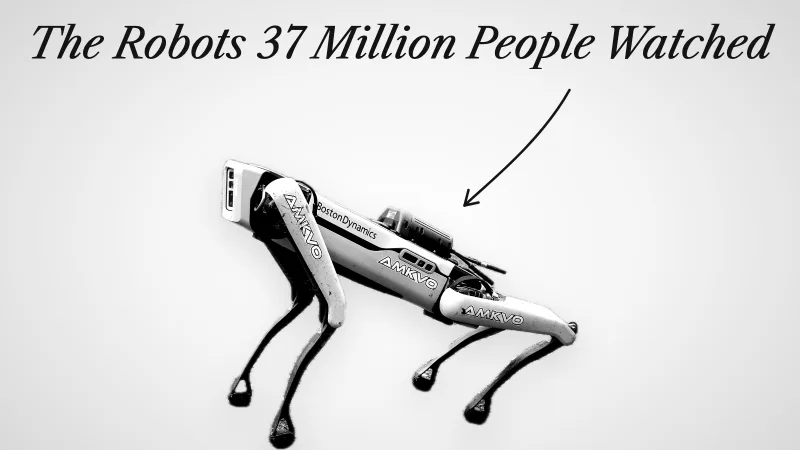
The deep tech content problem
A deep tech company sells something most people cannot picture: a control system, a sensor, a new battery chemistry, a robot. The engineers know exactly why it is hard. The buyers, investors and future hires do not. So the marketing team ends up with spec sheets, conference talks and a product video that lists features over stock music.
None of that shows the thing that matters, which is what the product can do that nothing else can. A spec like "dynamic balance on uneven ground" means a lot to an engineer and nothing to anyone else. The capability is real but stays invisible.
What Boston Dynamics did
Boston Dynamics had posted raw test footage of its robots on YouTube for years. The robots walked on ice, got pushed and caught themselves. Those clips built a reputation, but they also made the robots look a little scary.
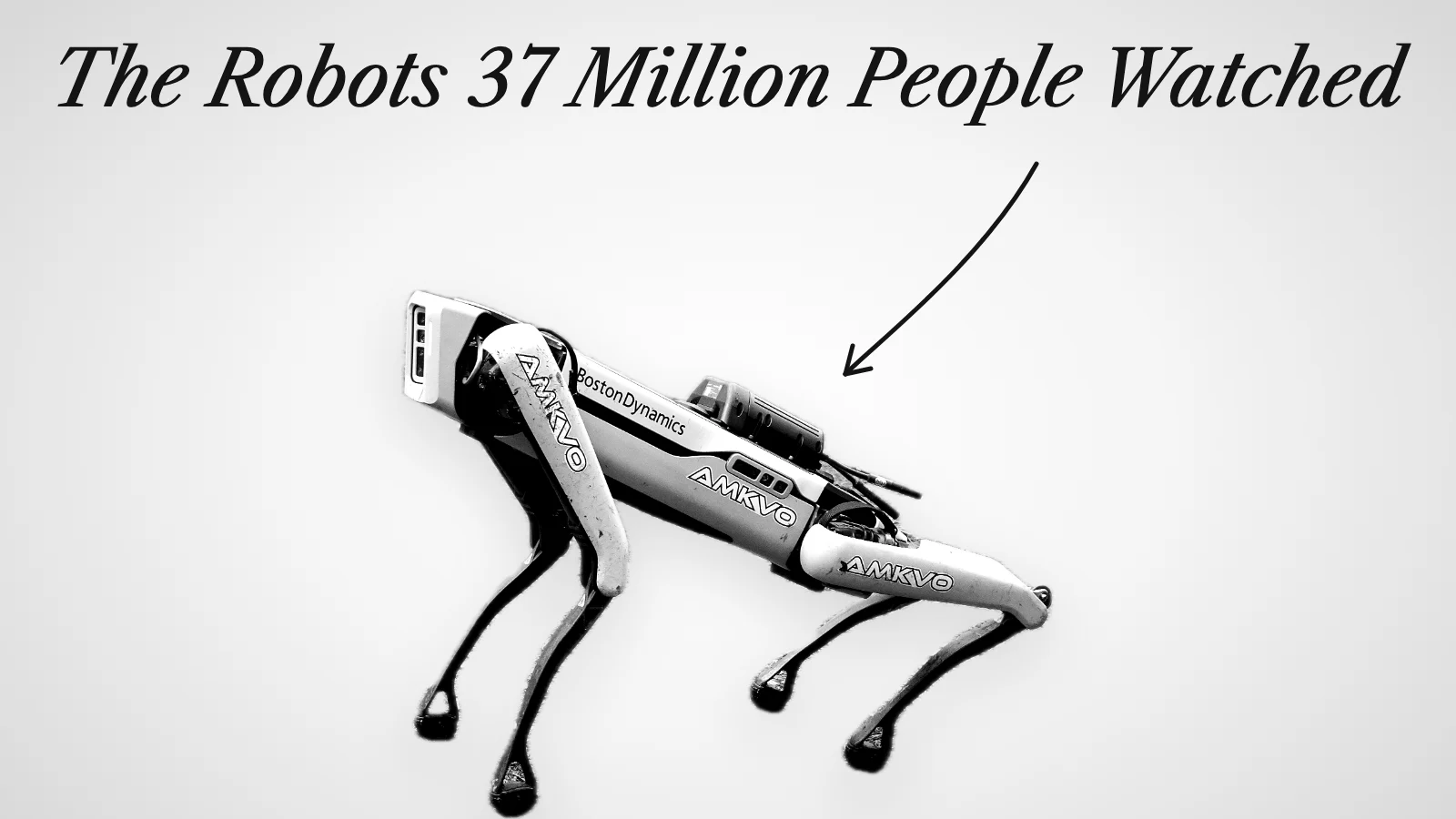
On 29 December 2020 the company posted "Do You Love Me?". It showed Atlas, Spot and Handle dancing to the 1962 song by The Contours. According to Boston.com it passed 23 million views in its first week, and IEEE Spectrum puts the total at more than 37 million. CBS Boston reported that it took almost a year and a half of choreography, simulation, programming and upgrades, plus two days of filming, to make a video under three minutes long.
The choreography came from Monica Thomas, a dancer who had worked with the company on an earlier Spot video. Founder Marc Raibert started it by watching a robot and thinking it could dance. Explaining why the company makes these videos, he said that when people see new things robots can do, "it excites them."
Why dance worked
Dance is a brutal test for a robot. It needs balance, speed, timing and whole-body coordination, all at once, to music, with no room to hide a stumble. A viewer does not need to know any of that. They know what good dancing looks like, so they understand straight away that something remarkable is happening.
That is the trick. The film takes a capability that only engineers could judge and puts it in a format everyone already knows how to judge. It also shifted the mood around the robots, from threatening to joyful, at a time when the company was selling Spot to businesses. Spot went on general sale in June 2020 at $74,500, and Boston Dynamics now says more than 1,000 Spots are working in the field. The work even turned into a product: the team built a tool called Choreographer to program robot movement.
Five things deep tech marketing teams can copy
- Show the hardest thing, not the full feature list. Pick the one capability that is hardest to fake and build the film around it.
- Borrow a reference everyone already knows. Dance, a race, a kitchen task, a crash test. The audience judges what they recognise.
- Spend on one film instead of ten small ones. Boston Dynamics spent eighteen months on under three minutes. One great film beats a year of filler.
- Keep a record of raw proof. Years of unedited test clips made people believe the polished film was real.
- Make engineers part of the creative team. The dance worked because choreographers and engineers solved movement problems together.
When you cannot film it at all
Most deep tech is harder to show than a robot. A power system, a chip or a piece of software has nothing for a camera to point at. In that case the same rule holds, and animation is how you follow it. We built NetShelter and a set of explainers for Schneider Electric and APC in 2D and 3D for exactly this reason: racks and power architecture do not photograph well. The aim was the same as Boston Dynamics': show the one thing the product does that matters, in a way a stranger understands in ninety seconds.
Sources
- IEEE Spectrum, Making Boston Dynamics' robots dance
- CBS Boston, The inside story of getting Boston Dynamics' robots to dance
- Boston.com, These dancing robots have been watched over 23 million times (Jan 2021)
- VentureBeat, Boston Dynamics starts selling its Spot robot for $74,500
- Boston Dynamics, Expands global sales of Spot