Content Cabinet
The short answer
A small VC firm should spend about one-third of its marketing budget making content and two-thirds getting that content in front of founders and LPs. That is the split Amir Khan, co-founder of StudioK and an investor with MARL 5G, gave on Top of the Cabinet, the show run by Content Cabinet, which wrote this guide. Start with one flagship piece, name the audience, and write the distribution plan before you shoot.
Why does a VC firm need a marketing arm?
A VC firm needs a marketing arm because founders now choose who to call from what they have already watched. Amir said it this way, 31 minutes into the episode:
"Our market is not on Google Forms anymore or the intake forms. Our market is out there watching Instagram, watching Twitter."
Then he drew the line between the funds that act on this and the funds that wait: "Having a marketing arm for the VC firm is the difference that people will know about you and come to you versus going to your next door neighbor." Andreessen Horowitz is the famous case, and our teardown of the a16z media operation shows how many years it took. Most emerging managers will never have that budget, so this guide works with $42,000.
Amir also calls venture "a relationship business," and his own story shows where content fits. In 2015 he applied to Right Side Capital through its website, and when Dave Lambert called, Amir had no idea who he was. The deal came together in three days, and a decade later Lambert is his mentor. Right Side can afford to be a stranger on the first call because it moves that fast. A fund that takes three months to wire money needs its reputation to reach the founder first.
How much should a VC firm spend on marketing, and on what?
For a ₹40 lakh budget, Amir's answer was an even split at the very least, and one-third on production with two-thirds on distribution if you can manage it. His reason at 47:20 was his own experience: "We produce great content, amazing content, but we didn't actually spend on distribution of it."
| Budget line | Even split | Amir's preferred split |
|---|---|---|
| Content production | ₹20 lakh (about $21,000) | One-third: ₹13.3 lakh (about $14,000) |
| Distribution | ₹20 lakh (about $21,000) | Two-thirds: ₹26.7 lakh (about $28,000) |
He closed the point with the line we would tape above any fund's content calendar: "If you can make the best movie ever, but if you can't distribute it, no one can watch it."
To size this against your own firm, start from the fee. At 2%, a $30 million fund earns about $600,000 a year to run everything, so $42,000 is 7% of it. That is a real decision for a small team, and worth checking against what your partnership agreement says about who pays for marketing.
What does distribution mean for a venture fund?
Distribution is every route that puts your content in front of people who do not follow you yet. Amir's numbers stop at the split, so the list below is ours, drawn from campaigns we have run for investors.
| Route | Who it reaches | Where the money or time goes |
|---|---|---|
| Speakers' and founders' own accounts | Their followers, who already trust them | A captioned clip for each person within a week, so posting it costs them nothing |
| Paid reach to a named audience | Founders by role, school or sector, and operators who may start companies | Boosting your single best clip on LinkedIn, Instagram or YouTube |
| Creator collaborations | Young builders who ignore fund accounts | Co-published reels. For StudioK, creators posted our films to their own followers |
| Portfolio company audiences | That company's customers, hires and partners | A clip cut for that company's market, as in the reel further down |
| Rooms | Founders, co-investors and LPs in one place | A screening, opening night or demo day, filmed so the room produces more clips |
| Your LP letter | Current and prospective LPs | One link in the quarterly note. Our LP update template is a place to start |
With the $28,000, we would start with about half on paid reach, about a third on creators and co-publishing, and the rest on clips and one event. Those shares are our judgment, so expect to change them: after 90 days, move money toward whichever route founders bring up on first calls.
What content should a VC firm create first?
A VC firm should first create one flagship piece that answers the question Amir puts to every fund: "Why should a founder come to them versus somebody else?" For most firms that is a single founder film or a short run of six podcast episodes. Picking one keeps two-thirds of the money free to move it.
The reason it has to be a story goes back to the most quoted line of the conversation: "Product is not the moat anymore. Distribution is." Amir's example is that the biggest SaaS companies now lose sleep over an MIT engineer with Claude Code. When anyone can build the product, the company that wins is the one people hear about. Funds have lived with that problem far longer than SaaS has, since one firm's dollar looks exactly like another's.
He points out that a founder is always selling: telling the family it will work out, the customer it will pay back, the employee the equity will be worth it, and the investor the money will multiply. Each pitch ends in "Trust me," and "that goes with VC firms too." He also retells an answer he remembers from Ashton Kutcher, who was asked why founders need him when Silicon Valley has plenty of money. In Amir's telling, Kutcher said they come to him for one reason: story time.
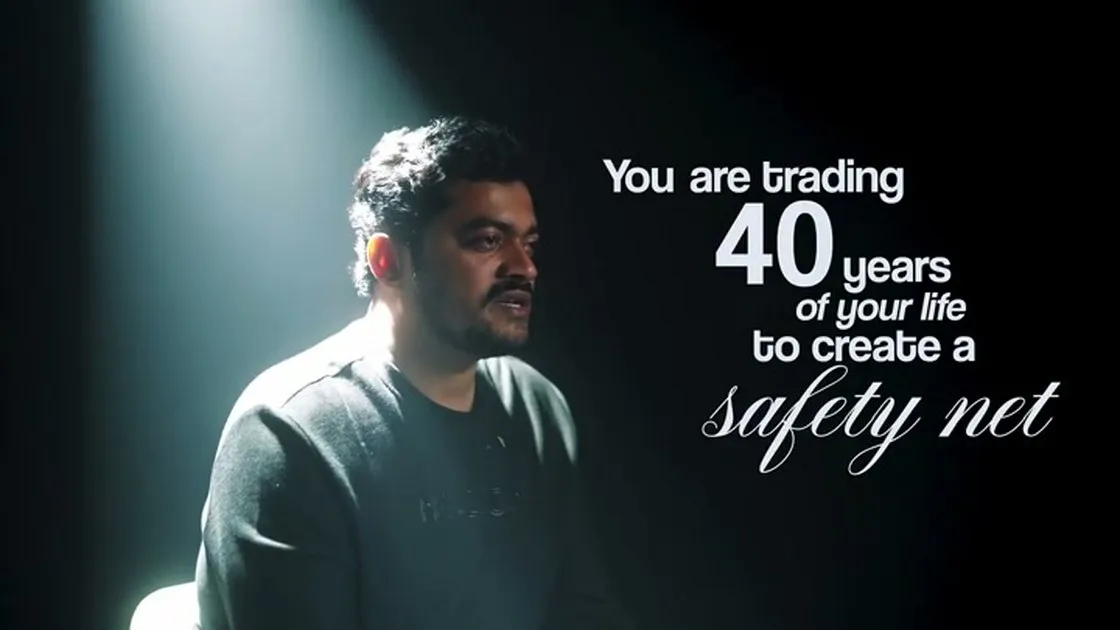
For StudioK, the flagship was the founders themselves. We made an opening film and then a founder series, each film following one young founder, with the fund kept in the background.
More of the films and reels are in the StudioK case study. If a podcast is the better fit, our guide to video podcasts for VC firms covers formats, costs and how to pick a studio.
How can one podcast episode help a portfolio company?
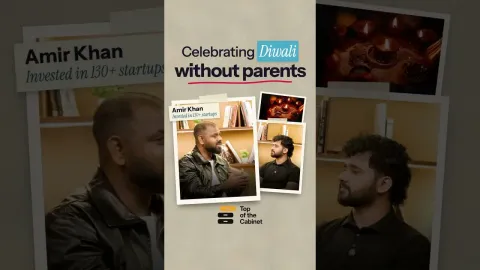
One episode helps a portfolio company when you cut a clip for that company's customers instead of your own followers. At 5:00, Amir explains why Zemplee, which Aparna Pujar built to help parents age safely at home, is the startup closest to his heart. His own parents are aging in India and do not want to move to the US. "It was an investment that impacted my heart," he says.
The obvious clip from that section would be about investing. We cut this one for the people Zemplee serves: sons and daughters abroad who worry about parents back home. The conversation reaches the story through a question about favorite startups, so we moved Amir's own words to the front and opened on "I have parents who are aging." We released it for Diwali, on November 8, 2026, when many of those families feel the distance most.
Any fund can run the same method on its next recording:
- Find the minute a partner talks about one company for personal reasons. Those minutes carry the feeling a thesis slide cannot.
- Name that company's customer, then cut for that person and forget your usual audience.
- Put the stakes in the first three seconds, even if it means reordering the conversation.
- Release on a date that already means something to that customer.
- Get the founder's sign-off, then ask the company to co-publish it.
Founders remember which investor sent them customers, and the next founder will hear about it.
Where in the episode should a fund manager start?
Start at 31:49, where the conversation turns to why a VC firm needs a media arm, and stay through the end of the distribution section. The full episode runs 48 minutes.
| Time | What Amir covers |
|---|---|
| 3:46 | Why VC is a relationship business |
| 5:00 | 130 startups, and why Zemplee is closest to his heart |
| 31:49 | Why a VC firm needs a media arm |
| 35:13 | Product is not the moat anymore. Distribution is. |
| 36:45 | Ashton Kutcher and the power of a story |
| 44:52 | His pitch to family offices on venture allocation |
| 47:20 | How he would spend ₹40 lakh to take a VC firm digital |
How do you measure a VC firm's content marketing?
Add one question to your intake form, "How did you hear about us?", and read the answers every month. The market may have left the Google Form, as Amir says, but the form can still tell you which video brought someone to it.
Three other signals are worth tracking: how many first calls open with a founder mentioning something you published, whether founders you actually wanted are applying, and whether LPs reply to the note that carries your latest film. Give it three to six months of steady publishing before you judge it. We released this episode on November 7, 2026, so it is too early for us to report results from it, and we will add the numbers here once they mean something.
Questions people ask
What is the best marketing strategy for a VC firm?
Make one flagship piece that explains why a founder should choose your fund, then spend most of the budget getting it seen by the founders and LPs you want. Investor Amir Khan suggests one-third on content and two-thirds on distribution.
How much should a VC firm spend on marketing?
There is no standard figure. Start from the management fee: at 2%, a $30 million fund earns about $600,000 a year, so a $42,000 program takes about 7% of it. Plan it as a test with a review at 90 days.
What is distribution for a venture capital firm?
Every route that reaches people who do not follow the firm yet: clips on speakers' and founders' own accounts, paid reach to a named audience, creator collaborations, portfolio company audiences, events and the LP letter.
Does a VC firm need a podcast?
Only if the partners enjoy long conversations and can book guests founders want to hear. Otherwise a single founder film is a better first asset. In both cases, set aside the distribution budget before production starts.
Can a VC firm run paid ads?
It can promote its ideas, its partners and its founders' stories. It should keep the fund offering out of ads: US funds relying on Rule 506(b) cannot use general solicitation, and Indian AIFs raise money only by private placement. Check with counsel.
How can a small VC firm compete with a16z for founders' attention?
By being specific. A small fund cannot match a16z's media budget, but it can own one sector or one kind of founder, tell those founders' stories and put them in front of the right few thousand people.
Who is Amir Khan and what is Top of the Cabinet?
Amir Khan is a Silicon Valley deep tech investor with MARL 5G and a co-founder of the founder residency StudioK, and he has backed 130 startups across 22 countries. Top of the Cabinet is a video podcast from Content Cabinet, hosted by its founder Satyam Saxena, and he was the guest on the first episode.
Sources
- Top of the Cabinet E1 with Amir Khan, StudioK (November 7, 2026)
- Celebrating Diwali without parents, reel from the episode (November 8, 2026)
- Investor.gov, Rule 506 of Regulation D
- SEBI, Master Circular for Alternative Investment Funds (June 3, 2026, updated September 7, 2026)
- Federal Reserve H.10, Indian rupee exchange rates
- Right Side Capital
- StudioK