Content Cabinet
The short answer
To film an investor day well, decide what you will publish before the event, then plan the cameras around it: a recap film within 72 hours, each main session as a full episode, six to twelve short clips, and a private cut for clients or LPs. Mic every speaker separately, cover panels with three cameras, get a signed release from every speaker, and keep cameras off any session held in confidence. Released over twelve weeks, one day becomes a quarter of content.
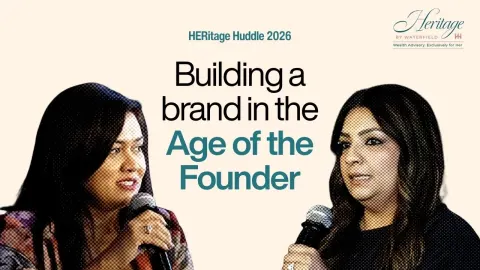
Content Cabinet, which wrote this guide, filmed Waterfield Advisors' HERitage Huddle 2026, including a fireside chat with Zia Mody, and its 2026 Investor Day, then cut both into full sessions and reels.
Filming an investor day, at a glance
| Question | Short answer |
|---|---|
| When do you plan the edit? | Before the event. List what you will publish, then plan the cameras around it. |
| How many cameras? | Three for a panel, two for a keynote or a fireside chat, plus one roaming camera for the room. |
| What about sound? | A separate mic on every speaker, the moderator included. Bad sound can't be fixed later; most lighting problems can. |
| What stays off camera? | Any session held in confidence, and anything about a fund's performance or units. |
| How soon does the first film go out? | Within 72 hours, while the people who were there are still talking about it. |
| What does one day become? | A recap film, the main sessions as full episodes and six to twelve clips, released over twelve weeks. |
What should you film at an investor day?
Film every session you would be glad to publish, the room's reactions, and short interviews in a quiet corner. Then decide before the day what each piece will become.
| Moment | How to cover it | Who is on camera | What it becomes |
|---|---|---|---|
| Keynote or founder's address | Two cameras, a clip-on mic, the slides as files | The speaker | A full episode and two or three clips |
| Panels | Three cameras, one wide and one on each side, and a mic for every panelist | Panelists and the moderator | A full episode and three to five clips |
| Fireside chat | Two or three cameras, with both speakers miked | The guest and the host | A full episode and the strongest clips |
| The audience | One roaming camera for reactions, questions and the room | Guests who agreed to be filmed | Cutaways for every edit |
| Corridor interviews | One camera and one mic in a quiet corner | Speakers, clients and founders who agree | Short testimonials and the recap film |
| Arrival and the venue | Wide shots, signage, people arriving | Nobody in particular | The opening of the recap film |
| Closed-door sessions | Cameras off | Nobody | Notes for your own team |
How many cameras and crew do you need?
For a single stage, plan a crew of five or six: three camera operators, a sound recordist, a fourth camera roaming the room, and a director who holds the run of show. Add a photographer, because stills and video need different positions. A breakout room needs two cameras and its own sound.
Two choices matter more than the size of the crew. Mic every speaker separately, because panelists talk over each other and one shared mic can't be untangled later. And record the room on its own track, because laughter and applause are what make a cut feel alive.
What do you need to sort out before the day?
- Releases. Every speaker signs a release for recording and publishing. Tell attendees at registration and at the door that sessions are filmed, and give them a way to stay out of close shots.
- Confidential sessions. Decide in advance which sessions run under the Chatham House Rule, where people may use what is said but may not reveal who said it, and keep cameras off for those.
- Compliance. A SEBI-registered firm reviews every public cut against the advertising rules in our SEBI checklist. A fund keeps its performance, and anything about its units, out of public cuts; our guide to announcing a fund explains why for Indian AIFs.
- Names and titles in writing. Collect each speaker's name, title and firm exactly as they publish them. A misspelled name on screen is the one mistake every guest notices.
- A run of show with camera notes. Who speaks when, where they sit, and what is on the screen behind them.
- The one-question ask. Tell each speaker you will ask them one question on camera after their session, and tell them what it is.
- The slides. Get the files before the day. A slide filmed off a projector never looks right in the edit.
What does one investor day become?
Released over twelve weeks, one day becomes a season: a recap film, a run of full episodes and a steady flow of clips. This is the release plan we work to.
| When | What goes out | Why then |
|---|---|---|
| Within 72 hours | The recap film, 60 to 90 seconds, sent to everyone who came | People are still talking about the day |
| Week 1 | The two clips people quoted at the event | The lines are fresh, and the guests share them |
| Weeks 2 to 7 | One full session a week as an episode, each with one or two clips | A season from a single day |
| Weeks 6 to 11 | The remaining clips, one or two a week | The feed keeps moving between episodes |
| Week 12 | A best-of cut and a save-the-date for next year | The archive starts selling the next event |
| Privately | A cut for clients or LPs, with a partner summing up what was discussed off camera | The people closest to you get more than the public |
What did we learn filming HERitage Huddle and an Investor Day?
We filmed Waterfield Advisors' HERitage Huddle 2026, an invite-only event on women and wealth, and its 2026 Investor Day. Four lessons carry over to any firm's event.
- The moderator makes the clips. In our edits, the clips that worked usually began with the moderator's question. Brief moderators to ask one sharp question per panelist, then get out of the way.
- One fireside chat can carry a campaign. The Zia Mody fireside became a full episode and a reel that passed 124,000 views on Instagram.
- Panels need reaction shots. A panel cut without the listeners' faces plays like a lecture.
- Write down the spellings. Every name and title on screen should come from the speaker's own published description. Guesses are where mistakes creep in.

Investor day, AGM, LP meeting or client conclave: what changes?
The audience decides what can be public. Agree the split with your counsel before the cameras arrive.
| Event | Who it is for | What can be public | What stays private |
|---|---|---|---|
| A wealth firm's client conclave | Clients, and families you hope to advise | Talks, panels and the recap film | Client names and anything about their portfolios |
| A fund's AGM or LP meeting | Your LPs | A partner's talk on the thesis, and founder stories the companies approve | Fund performance, LP questions and anything about the fund's units |
| A demo day | Investors and the press | The pitches each founder approves | Who invested, and on what terms |
| A portfolio or founder summit | Your founders | Talks and workshops | Founders' questions to each other |
Questions people ask
Can we film an LP meeting?
Film the parts meant to be shared, such as a partner's talk on the thesis or a founder's story, and keep cameras off for performance and LP questions. Indian AIFs should keep anything about the fund's units out of public cuts.
How soon should the recap film go out?
Within 72 hours. After that the people who attended have moved on, and so has the feed.
Do we need releases from everyone in the room?
From every speaker, in writing. For attendees, say at registration and at the door that the event is filmed, and give them a simple way to stay out of close shots. Check the details with your counsel.
What is the Chatham House Rule?
A rule for confidential sessions: participants may use what was said, but may not reveal who said it or where they work. Sessions held under it should not be filmed.
Should we livestream the event?
Only the sessions you would publish anyway. A livestream is the raw version; the edited episodes and clips are what keep working after the day.
What does it cost to film an investor day?
It depends on how many stages and cameras you need, and how many finished films, episodes and clips you want. We quote after a short call.